Resources

A curated collection of readings, tools, and materials to support thoughtful conversations about smartphones, social media, and artificial intelligence. These resources are intended to help educators and families better understand the impact of digital technologies and engage with them more intentionally.
“Technology shapes how we think, relate, and participate. Education helps us see it clearly.”
Digital Product
Teaching about Technology: A Resources Guide to Teaching about Smartphones, Social Media, and AI in Middle and High School
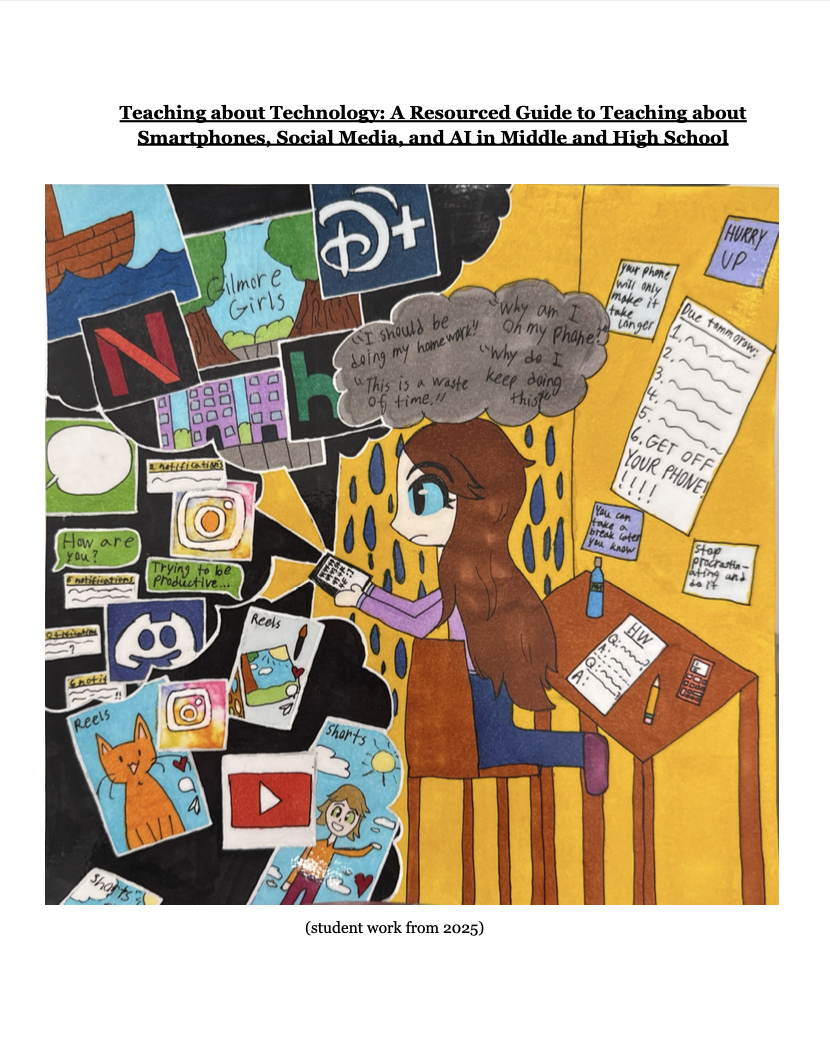
Teaching About Technology: A Student-Facing Curriculum
Teacher Resources
Books
The Attention Merchants, Tim Wu
To teach about the impact of digital technologies, understanding their business model is a foundational step. Columbia professor Tim Wu chronicles the historical presence of media entities that rely on consumer attention for survival, and puts social media companies in the context of a long history of the attention economy. To understand what we are giving away in exchange for free apps, and why we are glued to social media, this is a must-read.
Amusing Ourselves to Death, Neil Postman
Postman is one of the pre-eminent media theorists of the 20th century, and his focus in this book is how a medium can impact and influence our perception of all parts of society, including politics and education. The medium theorists, including Postman, emphasized the impact that the introduction of a new medium can have on a society and posed foundational questions about how media can alter and change our realities by getting us to view the world through their lens.
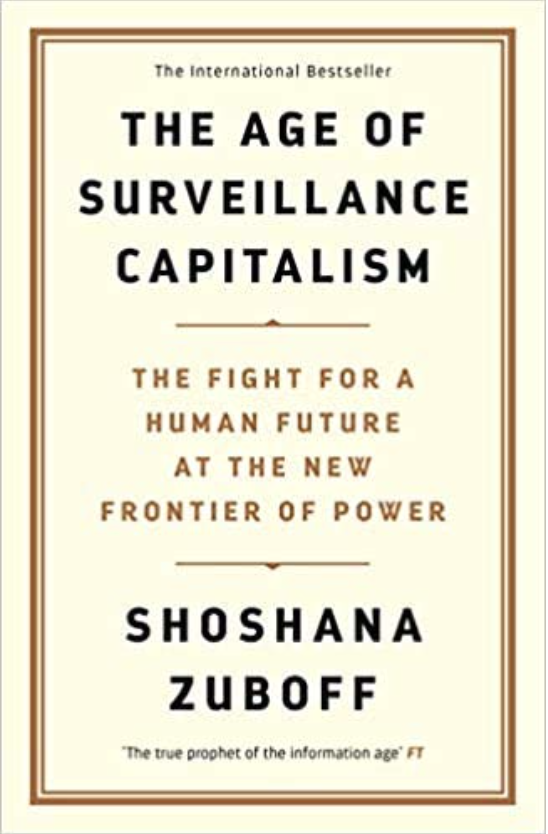
Age of Surveillance Capitalism, Shoshana Zuboff
This is a beast of a book, but it is essential in understanding the digital economy and the digital platforms that govern and control the internet. In great detail it describes the extent to which Google and Facebook conquered the economy through extensive data extraction practices of American citizens, pioneering a new economic model that tech companies in their wake would try to emulate.

Harari’s account of informational technology provides much needed context for our current digital environment. He details how societies inundated with information fare, including how these information networks shape the reality of societies when political institutions are slow to respond. With AI technology integrating itself into more and more of daily life, this book is useful in understanding how this technology might influence our realities individually and collectively.
Podcasts

“Buying Attention,” Hidden Brain, NPR
In this episode, Shankar Vedantam dives into how business practices of technology companies hijack our attention against our will, often to the detriment of our own well-being. It will be familiar to anyone who has checked their phone or computer for one thing and spent minutes or hours doing another. This is a great listen for understanding both the individual and collective impact of this business model.
“Your Undivided Attention,” Center for Humane Technology
From Tristan Harris of The Social Dilemma and Aza Raskin and Daniel Barcay, the Center for Humane Technology is a nonprofit organization dedicated to naming the harms of digital technologies without being anti-technology. “Your Undivided Attention” focuses on how digital technologies impact every part of our lives, from international relationships to human psychology.

“How the Attention Economy Is Devouring Gen Z — and the Rest of Us,” The Ezra Klein Show
This episode of The Ezra Klein Show featuring author Kyla Scanlon illuminates how the attention economy is affecting young people in particular, and how attention itself has become a signifier of cultural and economic power. Scanlon discusses the challenges that the digital economy poses for young people, including how AI might affect their future in significant ways – an important listen if we want to understand what young people are up against in the digital world.
Parent Resources
Books
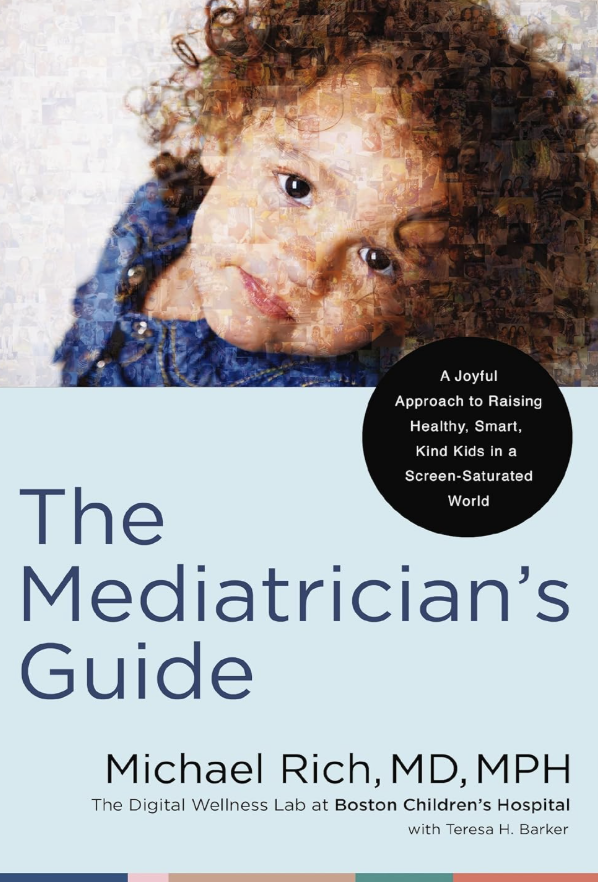
The Mediatrician’s Guide: A Joyful Approach to Raising Healthy, Smart, Kind Kids in a Screen-Saturated World, By Michael Rich, MD, MPH
Rich gives simple strategies for initiating conversation with kids about difficult topics and issues, many of which arise specifically because of digital media consumption. His experiences in creating the Digital Wellness Lab at Boston Children’s Hospital is the basis for the book.
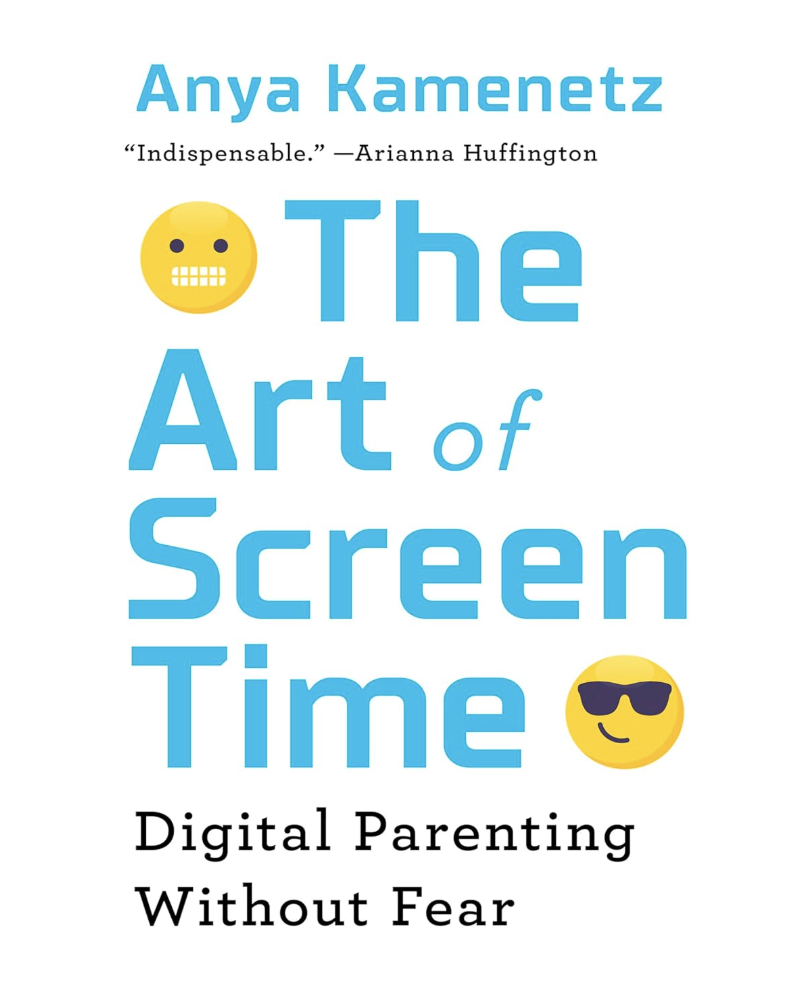
The Art of Screen Time: Digital Parenting Without Fear, by Anya Kamenetz
Kamenetz provides a moderate and nuanced approach for parenting in the digital age, which identifies broad notions of “screen time” as antiquated. Kamanetz allows for the fact that kids might be affected differently by their consumption, and asks parents to both pay close attention to their kids and how they might be influenced by digital applications.

The Anxious Generation, by Jonathan Haidt
Haidt provides a detailed analysis of the impact of smartphones and social media on kids while providing a blueprint to mitigate their harmful effects going forward.
Podcasts